
16 Budget-Friendly Things to Do in Rome
(Ultimate 2026 Travel Guide)
Rome is a true bucketlist destination, the centre of the famous Roman Empire and streets full of history. It’s also one of the most expensive cities in Europe for tourists. However, that doesn’t mean it’s impossible to visit on a budget. Here is your full guide to a budget-friendly Rome trip:
This blog may contain affiliate links to support the running of the blog. If you make a purchase through these links, I will earn a commission at no extra cost to you. Thank you.
Table of Contents
TogglePlanning your trip?
How to get to Rome:
Rome actually has two airports, Fiumicino Airport (often called Leonardo da Vinci Airport and the largest in Italy) and Ciampino Airport which has mostly budget airlines.
Alternatively, you can reach Rome by train (Trenitalia) or bus (Flixbus or Itabus) from either within Italy or many surrounding countries.
Where to stay in Rome?
Rome is pretty big, and knowing where to book your hotel can be tricky. Check out my full guide on the best areas here.
Best hostels and hotels in Rome:
🛏️ The RomeHello (amazing hostel, right by the metro, great facilities)
🏬Hotel Santa Prassede(lovely hotel, close to Termini)
🏩Hotel Maalot (beautiful, luxurious, central)
Activities to check out:
Top budget-friendly things to do in Rome
1. Revisit ancient history at the Pantheon
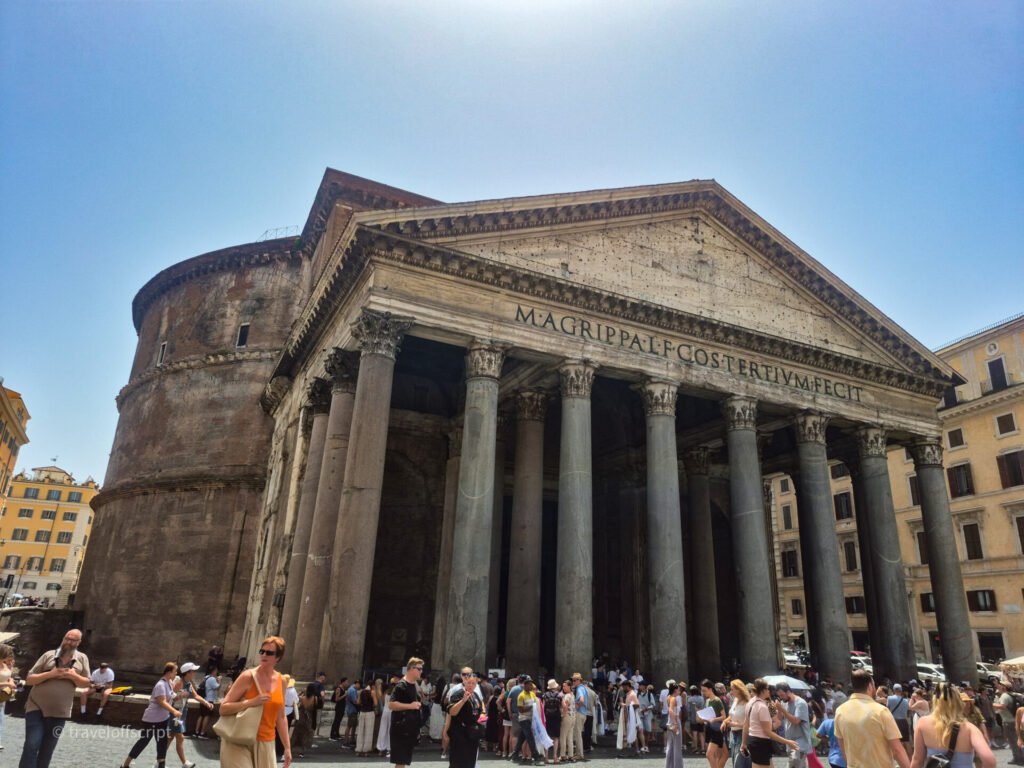
The Pantheon dates back to 125AD and is one of the best preserved ancient buildings in Rome. In the year 609, it was transformed into a Christian church from the previous pagan temple, which protected it from destructive raids during the Middle Ages.
Seeing the Pantheon from outside is completely free and impressive in itself.
I’d highly recommend checking out the inside though, it’s just 5€. The highlights are the massive unreinforced concrete dome, which relies on smart engineering, as well as the Oculus (hole at the top).
They also have an audio guide ticket for 17€, if you’re interested in the history.
2. Relax in the Villa Borghese Gardens
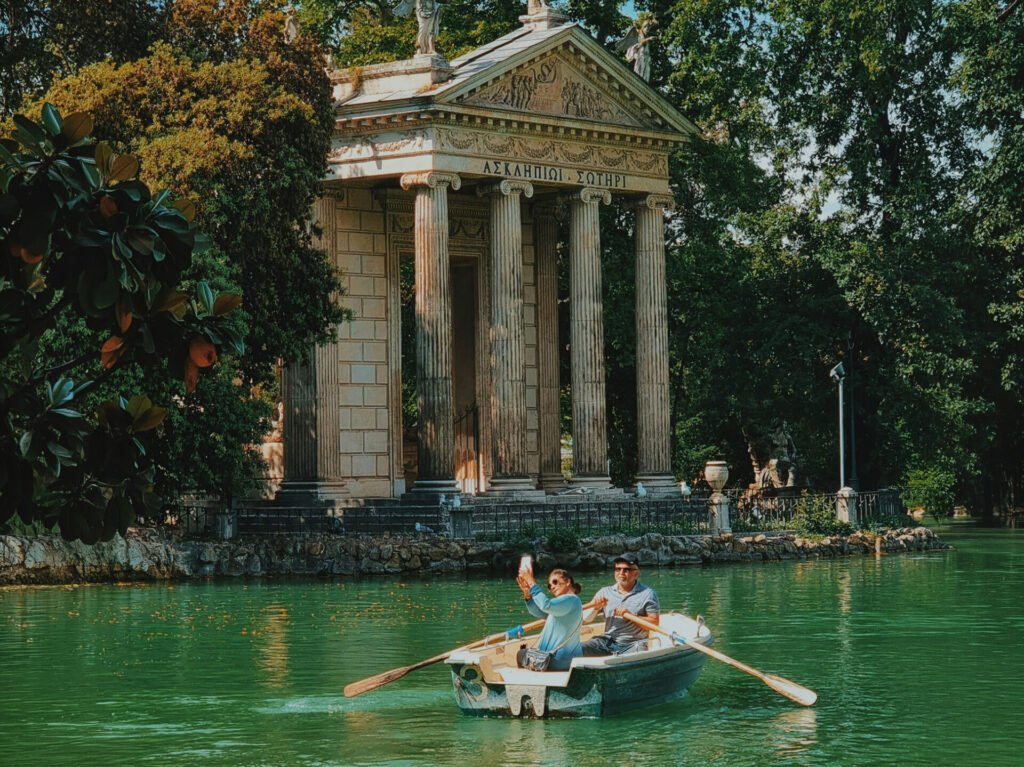
While the Museum inside Villa Borghese costs 16€ (but only 2€ if you’re under 25 from the EU), the stunning gardens surrounding it are completely free. They are often considered the “green lung” of Rome, an escape from the maze of streets and masses of tourists.
There’s a beautiful lake in the centre where you can rent a rowing boat for just €3 for 20 minutes per person. The perfect summer afternoon!
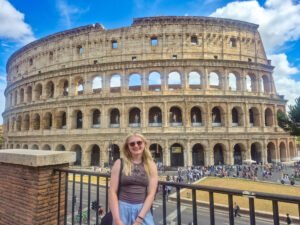
3. Find your Roman Empire at the Colosseum
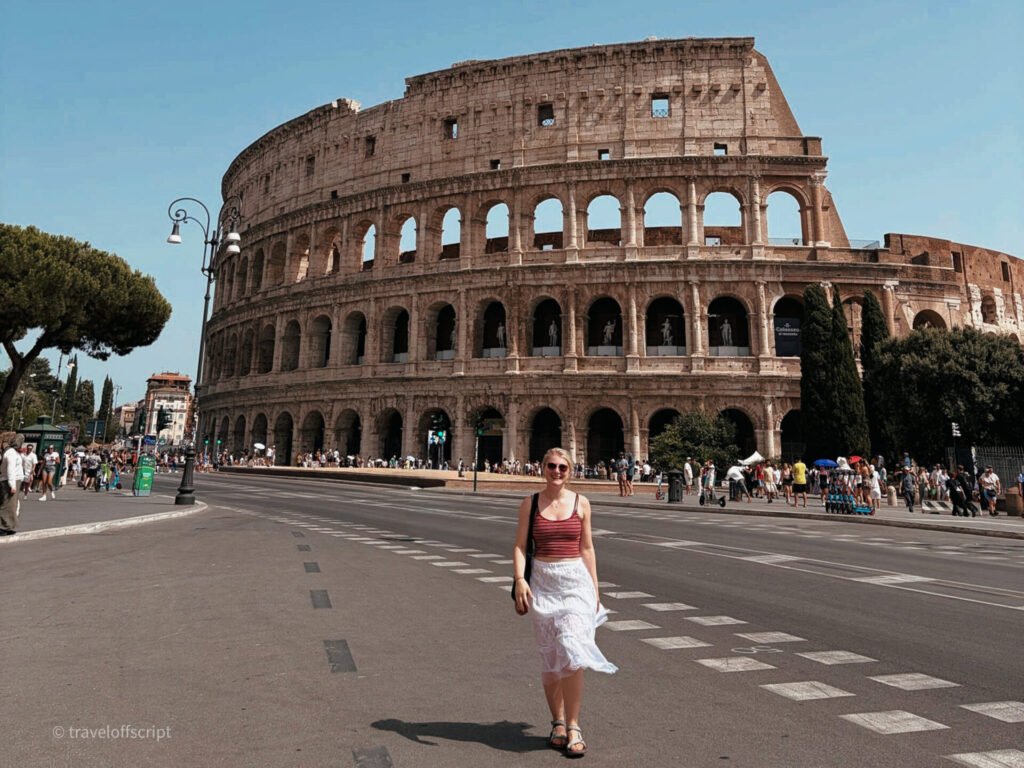
You can’t visit Rome without visiting the Colosseum. Built between 72 A.D and 80 A.D, the massive amphitheatre was home to gladiatorial contests and wild animal hunts for almost 4 centuries. It’s a feat of architecture and the central point of the Roman Empire.
The Colosseum, Roman Forum and Palatine Hill are a one-in-all attraction, which is great as you only pay entry once and get to visit all 3.
A simple Colosseum ticket without a tour but access to all three attractions should be 18€! Make sure you use the official website and aim to book at least 2-4 weeks in advance. With this ticket, you get timed entry to the Colosseum, but can visit the Forum within 24 hours of that time.
While a tour is very interesting, you can actually get a FREE audio guide from the official app: My Colosseum app.
Alternatively, there are countless tour operators who offer longer, more in-depth tours. Some affordable ones are below:
4. Head to Trastevere, foodie and nightlife centre
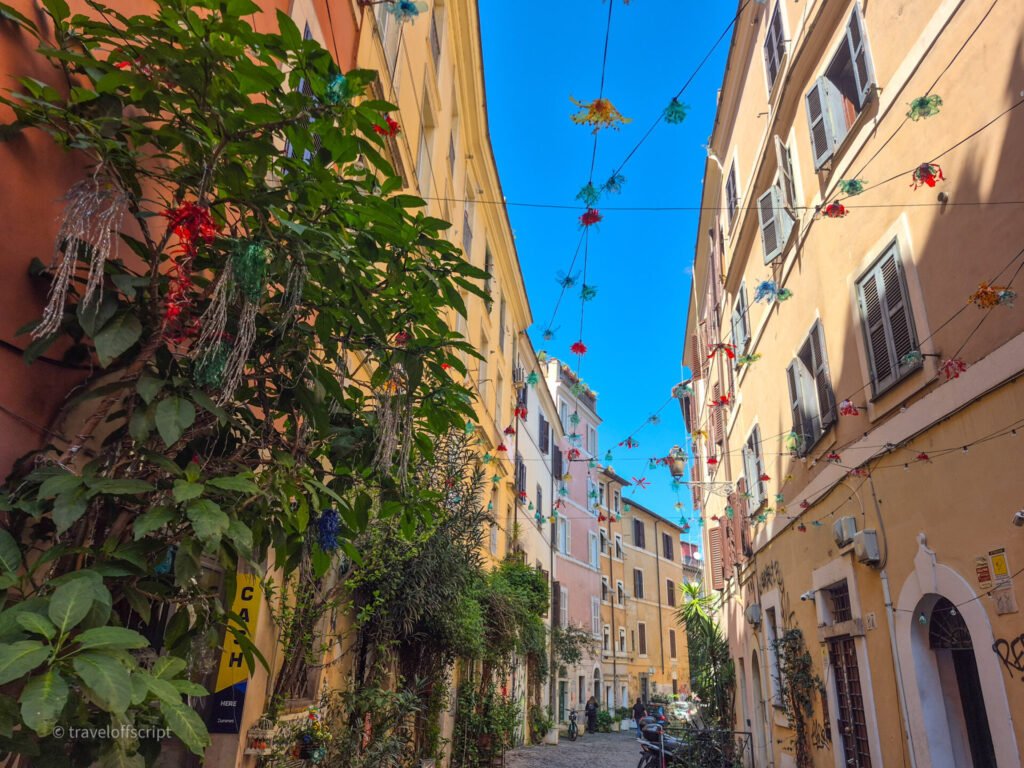
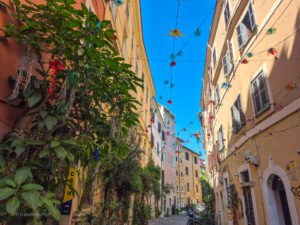
Trastevere is one of my favourite areas of Rome. It’s full of amazing restaurants, great bars, local shops and just an overall great atmosphere. The winding streets are full of colour and decorations, and it’s a great mix of locals and tourists.
This is the foodie and nightlife centre of Rome, and while a food tour can be a great way to experience it, you can also DIY it for much cheaper. Foods to try would be:
- counter-serve pizza (a Roman street food, focaccia texture in pizza form)
- Suppli (fried rice balls in the typical roman pasta flavours, Carbonara, Cacio e Pepe and amatriciana)
- Real Gelato (should be served in covered metal containers)
- Roman Pasta, such as Carbonara, Cacio e Pepe and amatriciana
- Maritozzo (sweet yeast buns filled with cream)
- Carciofi Alla Giudea (fried artichokes, amazing!)
If you do spend money on something here, let it be a cooking class. One of my highlights of my time in Rome and 1000% worth it:
5. Enjoy the views from Monumento a Vittorio Emanuele II
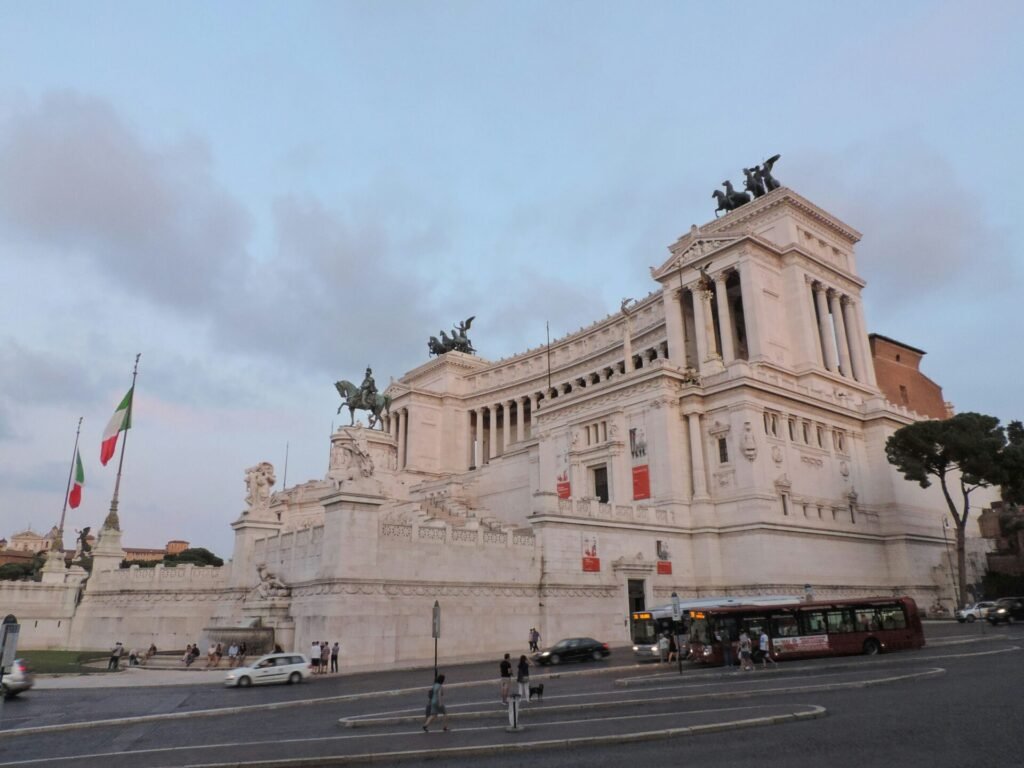
The Monument to Victor Emmanuel II, also called Vittoriano or by locals “the Typewriter” and “The Wedding Cake”, is a huge white, marble monument dedicated to the first King of a unified Italy.
It’s not a favourite amongst locals, hence the lovely nicknames, as a significant portion of an old, medieval neighbourhood was destroyed to build it. This caused a lot of displacement amongst the local population. Many say the Vittoriano can be spotted from almost anywhere in Rome.
The lower monument and internal halls are completely free to visit, and you already get some gorgeous views over Rome from the top of the stairs. You can also visit the Tomb of the Unknown Soldier for free, a war memorial to commemorate unnamed fallen soldiers, guarded by the army.
There is an elevator and panoramic viewing terrace at the very top of the monument which costs 18€ on the official website. It’s often considered one of the most beautiful and quietest sunset spots in Rome.
6. Visit a whole new country: The Vatican
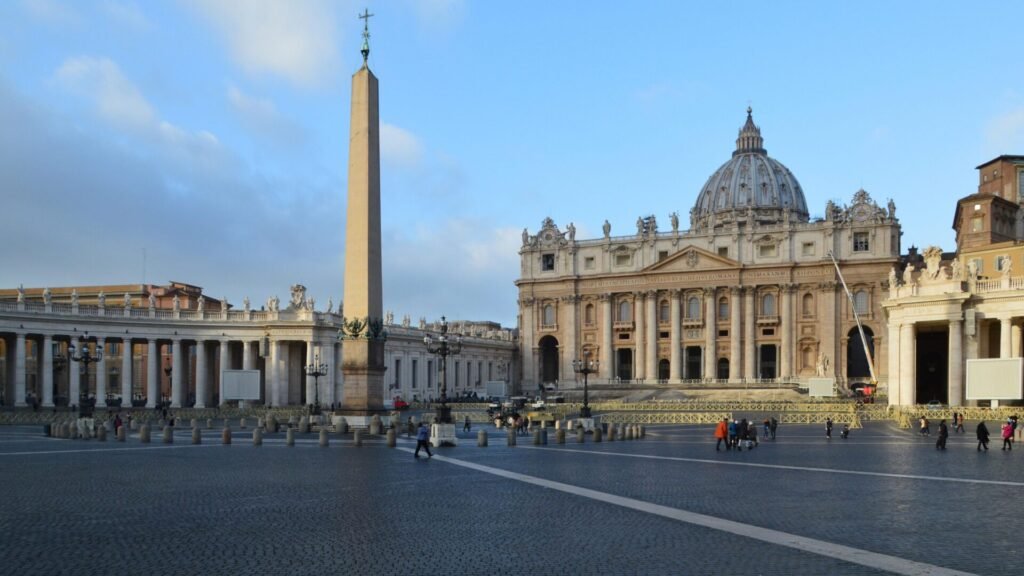
Visiting the Vatican can seem overwhelming and expensive, and you’ve probably heard about the huge queues. It isn’t nearly as bad as it seems though and it’s truly a bucketlist item.
The Vatican grounds and St. Peter’s Basilica are actually free to visit, just expect long queues for the Basilica (during peak season). A little trick is to get the audio guide for 7€, which gives you timed entry and lets you skip the line.
Heads up: When I say skip-the-line for any part of the Vatican, it doesn’t include security. No matter what tour/ticket you have, you can expect to queue there for a bit, but usually nothing dramatic.
The Vatican Museum and Sistine Chapel cost 20€ (+ 5€ reservation fee), make sure to book well in advance here. This gives you timed entry and hence automatic “skip-the-line”. Be aware that you may have to queue a bit for the Sistine Chapel as they have strict crowd control measures. An early morning ticket is best for this.
So you can technically see the Vatican Museum, Sistine Chapel AND St. Peter’s Basilica for just 25€ if you’re happy to queue, or 32€ with the Basilica hack.
There are some more affordable tours with experienced guides if you don’t want the hassle of doing it yourself, I’ve linked some below:
7. Throw a coin in the Trevi fountain
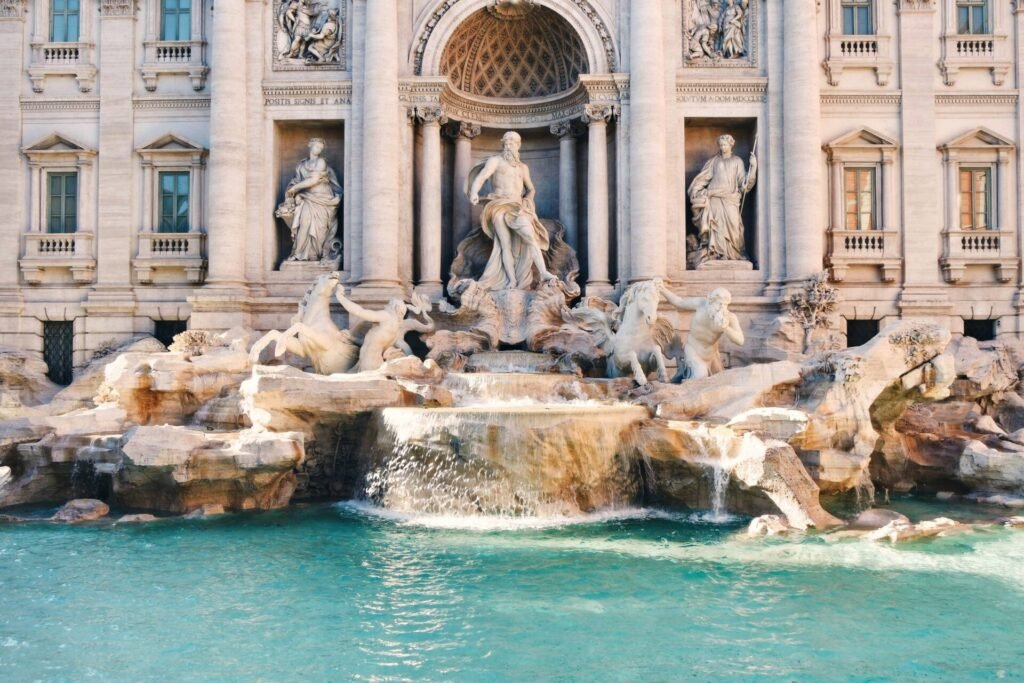
The Trevi fountain is one of Rome’s most famous landmarks and for good reason. It’s the largest fountain in the city and its origins date back to 19BC where it formed the end of the Aqua Virgo aqueduct.
It is said that if you throw one coin over your left shoulder with your right hand, you will return to Rome. Throwing two will increase your chance of finding true love in the near future and three means you will get married to a Roman.
The money in the fountain actually goes to a good cause too. It’s donated to the Charity Caritas, who provide food and shelter to vulnerable communities in the city.
The Trevi Fountain used to be completely free up to this year, now it’s 2€ during the day to get close enough to throw your coins. You can still see it from the main area for free though.
They also stop charging from 10pm to 9am. I’d recommend going there in the early morning anyway, as it’s extremely busy otherwise.
8. Marvel at the Spanish Steps
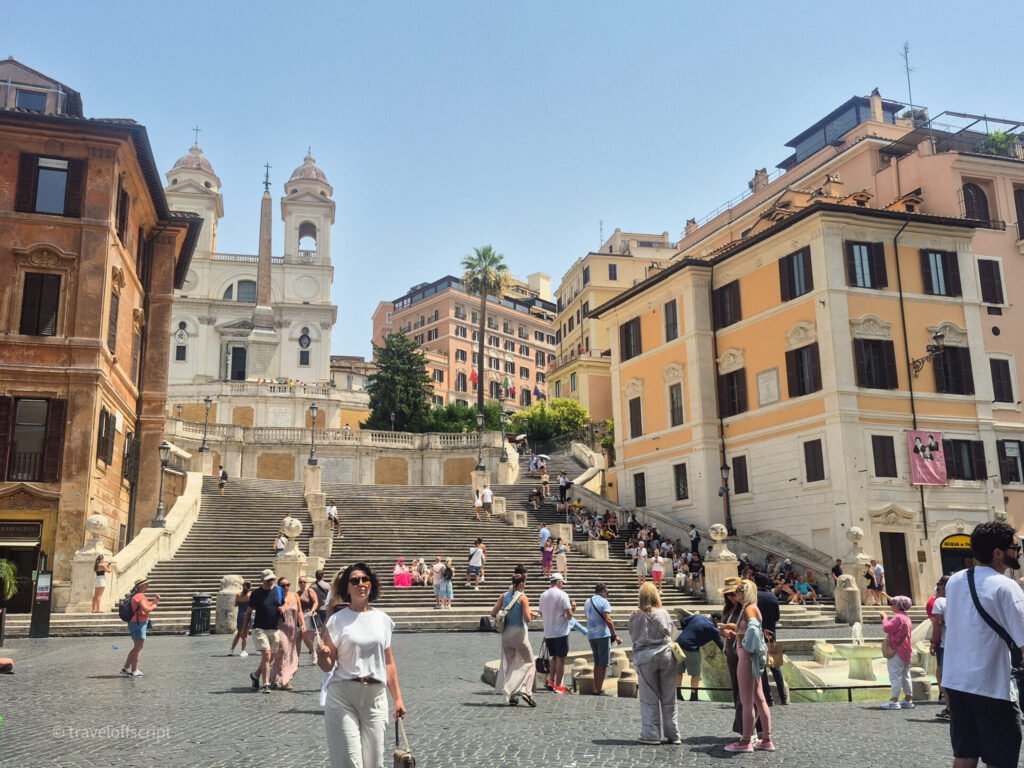
Famous for their beautiful butterfly shape and Rococo style, the steps lead from Piazza di Spagna square to the French monastery church Trinita dei Monti. They are often refered to as Spanish steps, after the Spanish embassy at the bottom, but are officially named Scalinata della Trinità dei Monti after the French church at the top.
They are also completely free to visit, just don’t sit on the steps as you may get a huge fine.
The fountain at the bottom was designed by Pietro Bernini (father of the famous Gian Lorenzo Bernini). As there is low water pressure in the area, the sunken boat design is a way to still make the fountain special with limited water jets.
9. Watch the sunset from Giardino degli Aranci
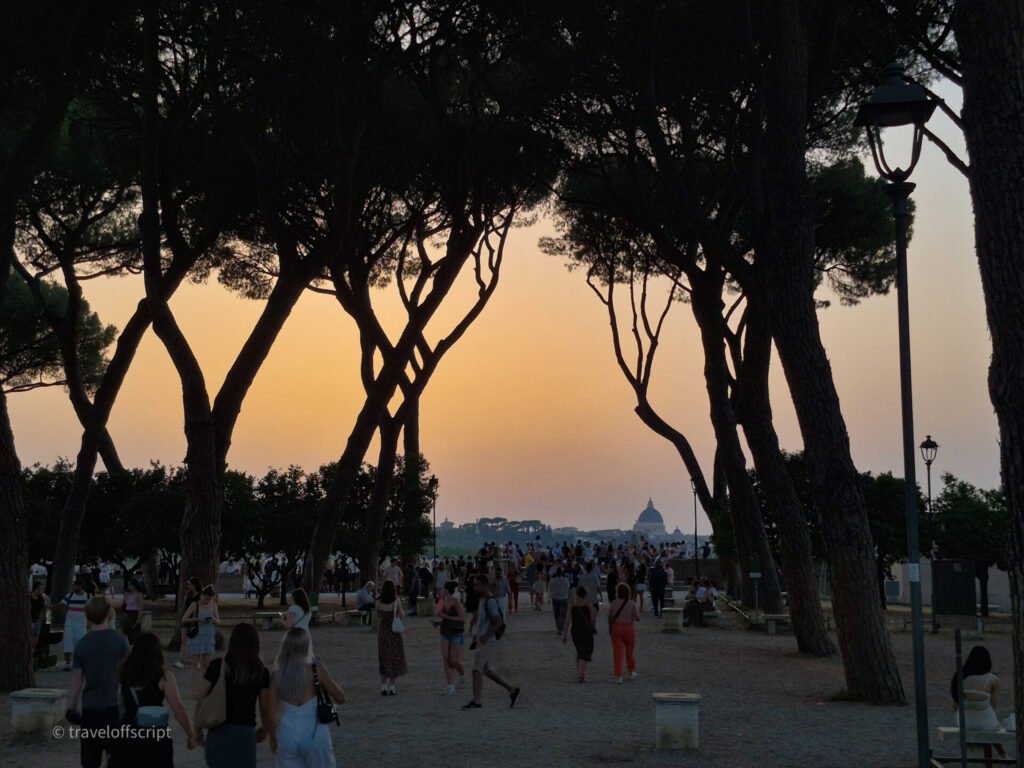
Giardino degli Aranci, also referred to as the Orange Garden due to many orange trees, is one of my favourite places in Rome and once again, it’s free. It’s one of the best sunset spots in the city, with views over the Forum all the way to St. Peter’s Cathedral in tha back.
It’s overall a beautiful and peaceful garden, plus the famous keyhole that frames St. Peter’s Basilica is just around the corner. Just be prepared to queue for the keyhole.
10. Visit some of Rome’s most beautiful churches
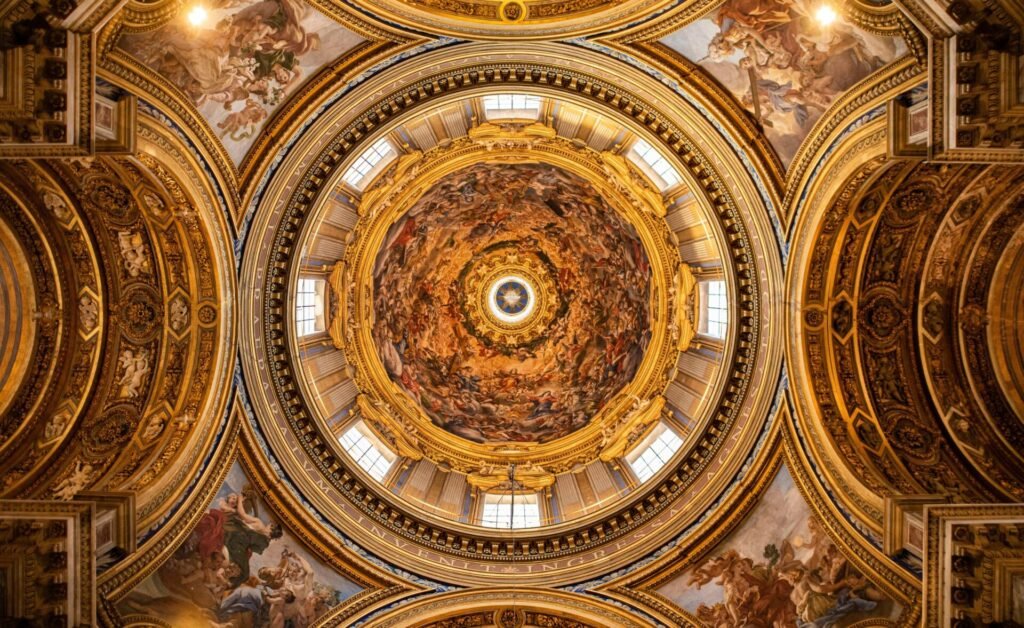
Rome is said to have over 900 churches, and honestly one is more beautiful than the next. And the best thing is that the vast majority of these churches are once again free to visit.
Two of my favourites are Basilica di Sant’Andrea della Valle and Sant’Ignazio di Loyola. However there is literally a stunning one around every corner in Rome and you could spend an entire day just church hopping.
Remember that all churches in Italy have a dress code of covering your shoulders and knees, I’d recommend bringing a thing scarf to throw over for hot summer days.
11. Find the "Holy Kiss”
The areas around the Vatican are called Prati and Borgo and are full of delicious restaurants, countless souvenir stores and clothing shops. They are actually some of my favourite streets to wander.
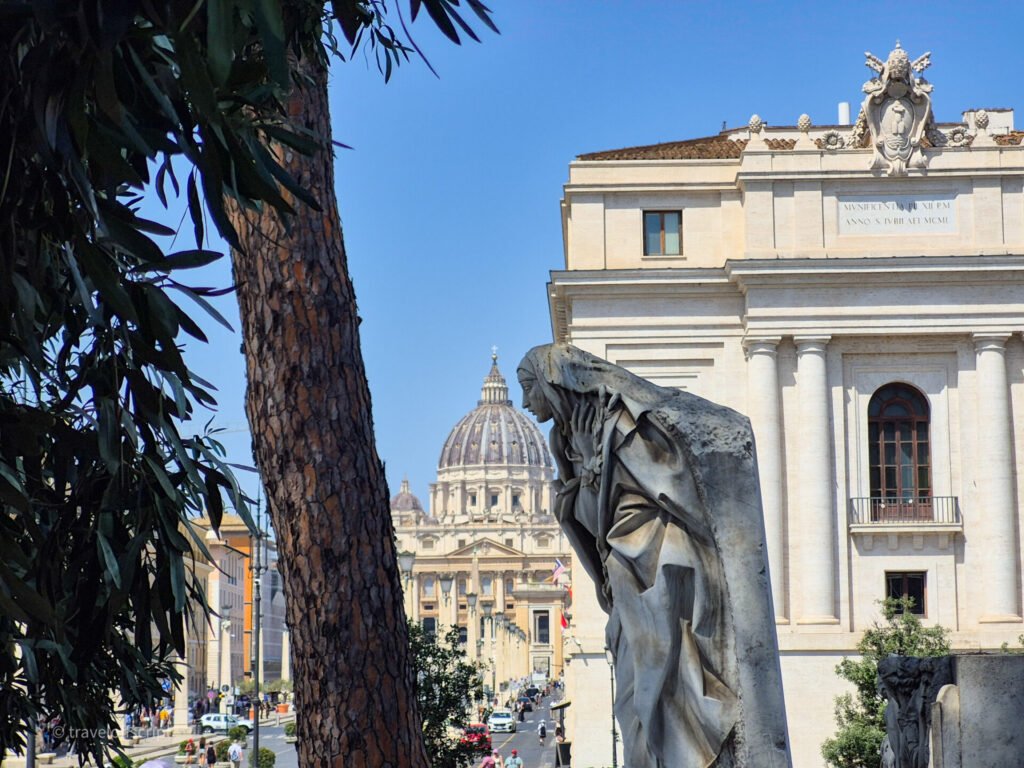
If you do so, continue towards the Tiber River, specifically the Monumento di Santa Caterina da Siena. If you stand on the patch of grass facing the St. Peter’s Basilica, you will find the famous “Holy Kiss”. This is the optical illusion where it looks like Saint Catherine of Siena is kissing the dome of St. Peter’s Basilica.
Easily one of the most stunning photo opportunities in Rome.
12. Wander along the Tiber River
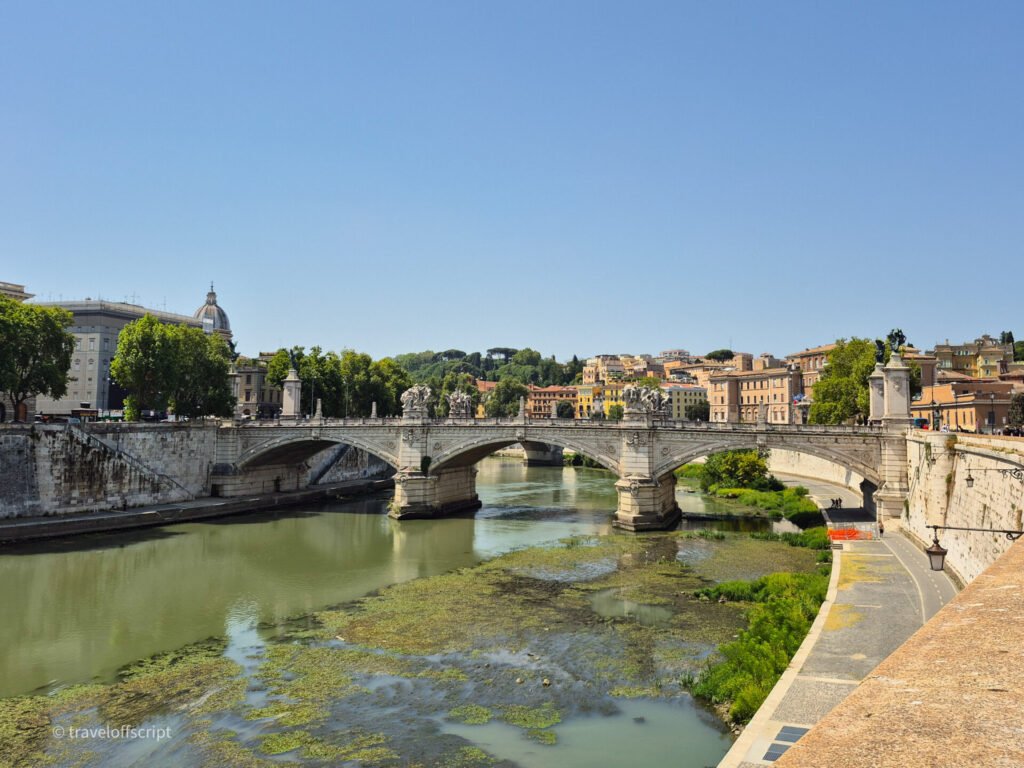
The Tiber River runs past many of Rome’s most famous neighbourhoods and is actually said to be the reason Rome was founded in the first place. The legend of Romulus and Remus said they floated down this very river before being rescued by a she-wolf, and Romulus later founded Rome on the Palatine Hill right by the river.
Over history, the Tiber was important for the growth and expansion of Rome. Nowadays, it’s a beautiful location for a stroll between many of Rome’s most famous landmarks.
Plus there’s almost always a festival going on along the river banks, like the Lungo il Tevere that runs for most of summer. A great place for an evening drink as well as experiencing local art, music and culture.
13. Head to the beautiful Piazza Navona
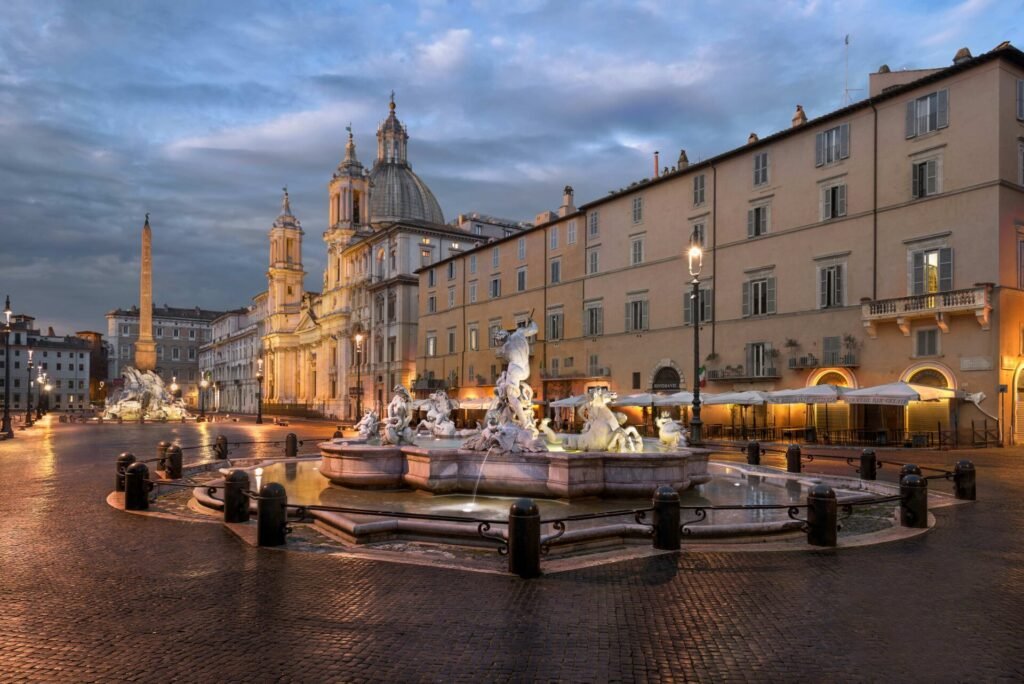
Have you ever heard the saying that Rome is like a Lasagna? As in thousands of years of history are built upon each other in this city. Instead of tearing each layer down, Rome decided to build on top of it.
Piazza Navona is one of the best examples of this. Below the now buzzing square with restaurants and bars, there used to be an ancient racetrack. The oval shape you see today is the same as the Stadium of Domitian many, many years ago.
The square is also full of gorgeous Baroque architecture, as well as three beautiful fountains. In the 17 and 1800s, these were used to flood the square so nobles could showcase their new boats. A very unique form of entertainment.
I’d also recommend checking out the streets behind Piazza Navona (like V. dei Coronari), for more local restaurants and bakeries. You’ll find much better quality and prices than directly at the Piazza!
14. Look up the ancient columns of Hadrian's temple
Hadrian’s temple is most famous for the 11 Corinthian columns, which are 15m high and truly impressive.
The temple was originally built in honour of great Roman Emperor Hadrian in 145, who is known for his peaceful reign and expansion of Greek culture.
It is now a functioning part of the Rome Chamber of Commerce, so it’s most impressive from the outside and inside viewing is limited. Though hot tip, it’s free to go inside and there’s air con.
15. Join a Free Walking Tour
A free walking tour will forever be one of my favourite ways to see a city. Basically, you tip at the end what you though the tour was worth (usually 10-20€ per person, but you can adjust it to your budget).
These tours are locally run, show you all the highlights and their history in a few hours and give you an amazing overview of a city. Plus the guides often give you their recommendations for food etc. at the end.
16. Check out the local markets
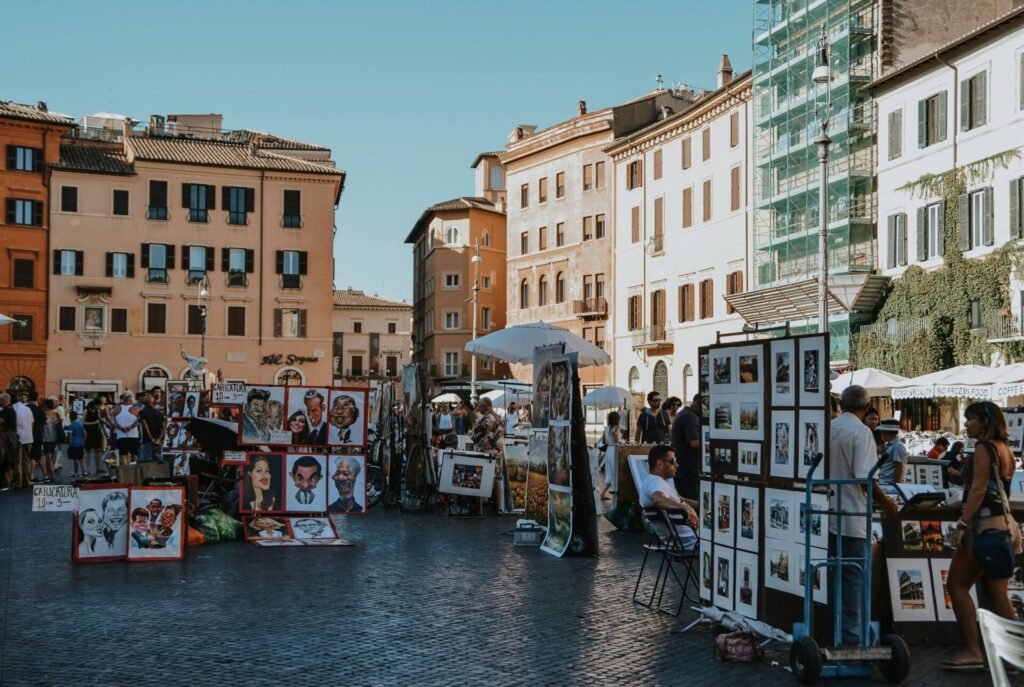
Rome has some amazing local markets where you can find bargains, local produce or just get a feel for life in Rome. Even if you don’t buy anything, they are a great way to spend an afternoon
Some of the ones to check out are:
- Porta Portese Market – great for souvenirs, flea market, open Sundays
- Borghetto Flaminio Market – another great flea market on Sunday
- Campo de Fiori – oldest market in Rome, sells food and delicacies, Monday to Saturday
- La Soffitta Sotto I Portici Market – great for second-hand items, every 2nd Sunday
You may also be interested in:
How many days do you need in Rome?
I’d recommend 3-4 full days in Rome to see the main sights without rushing, while also having some time to wander. Rome is beautiful everywhere, and I have found some of my favourite streets and restaurants by wandering off the tourist mile in the centre.
That being said, if you’re short on time, you can actually see Rome’s highlights in just 2 days. Check out my blog post on the exact itinerary here.
Is Rome walkable for tourists?
The centre of Rome from around the Spanish steps to the Trevi Fountain, Pantheon, Victor Emmanuel II Monument all the way to the Colosseum is actually pretty walkable. And that’s also the best way to see everything, plus the stunning streets of Rome that have a beautiful, old palace hidden around every corner.
That also means you can expect to hit 20,000 steps easily on a day exploring Rome, so bring good shoes (I swear by my Tevas in summer).
To get to places like Vatican or Trastevere, you would be walking a little longer and it is better to hop on a metro or bus. That being said, Trastevere actually only has a tram or buses heading there and can be a little tricky to get to, as they haven’t been able to extend the metro there because of the risk of damaging archeological monuments in the area.
Other than that, Rome is pretty well connected with the public transport system and affordable, with one journey costing around 1.50€.

Hi, I'm Bell
I’m a solo traveller, writer and designer. I created my blog to share the many different ways to travel the world. Learn more about me here!
Latest from the blog:
Travel Off Script contains affiliate links to support the running of the blog. If you make a purchase through these links, I will earn a commission at no extra cost to you. Thank you.

One comment
Super helpful for a budget girlie thanks