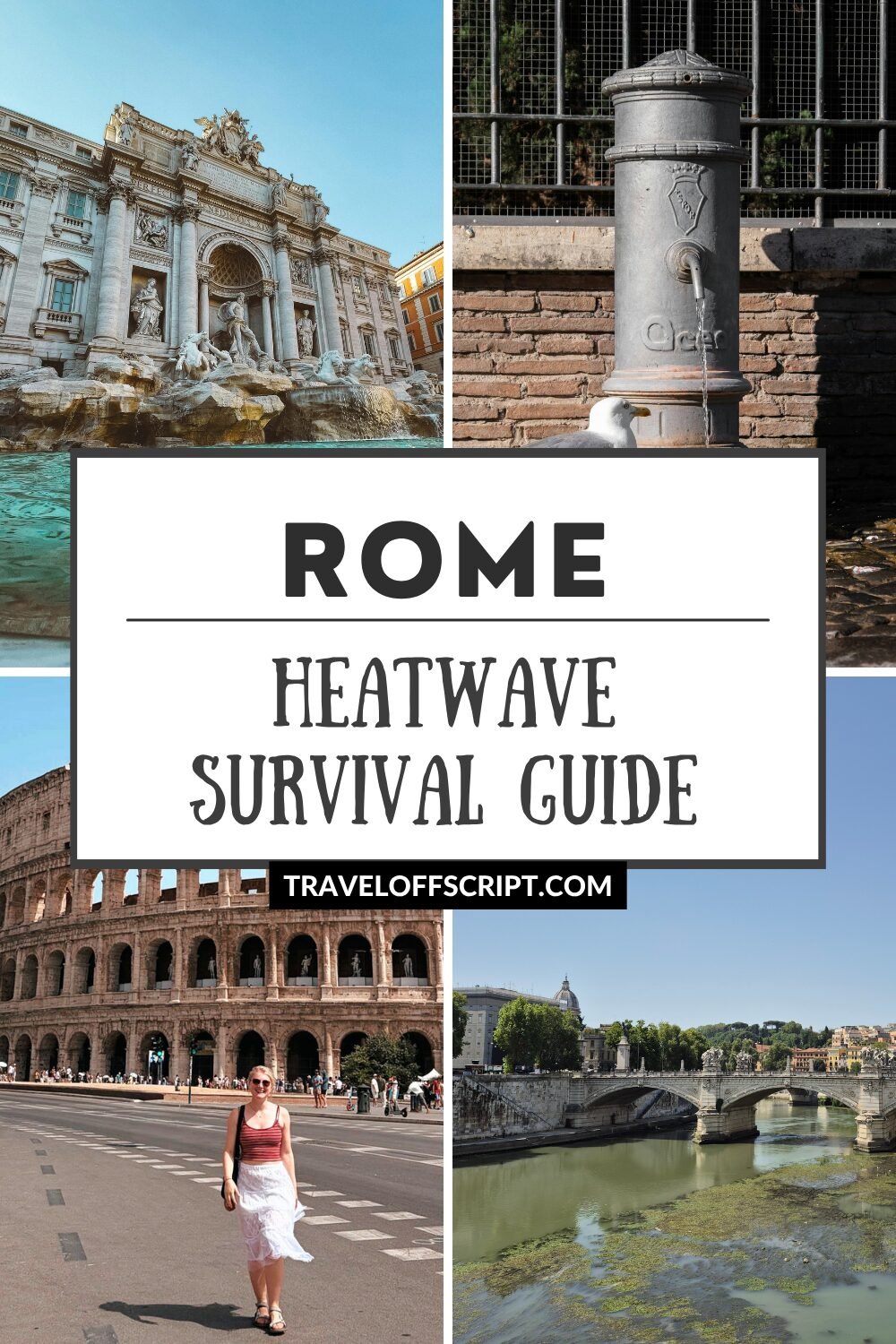
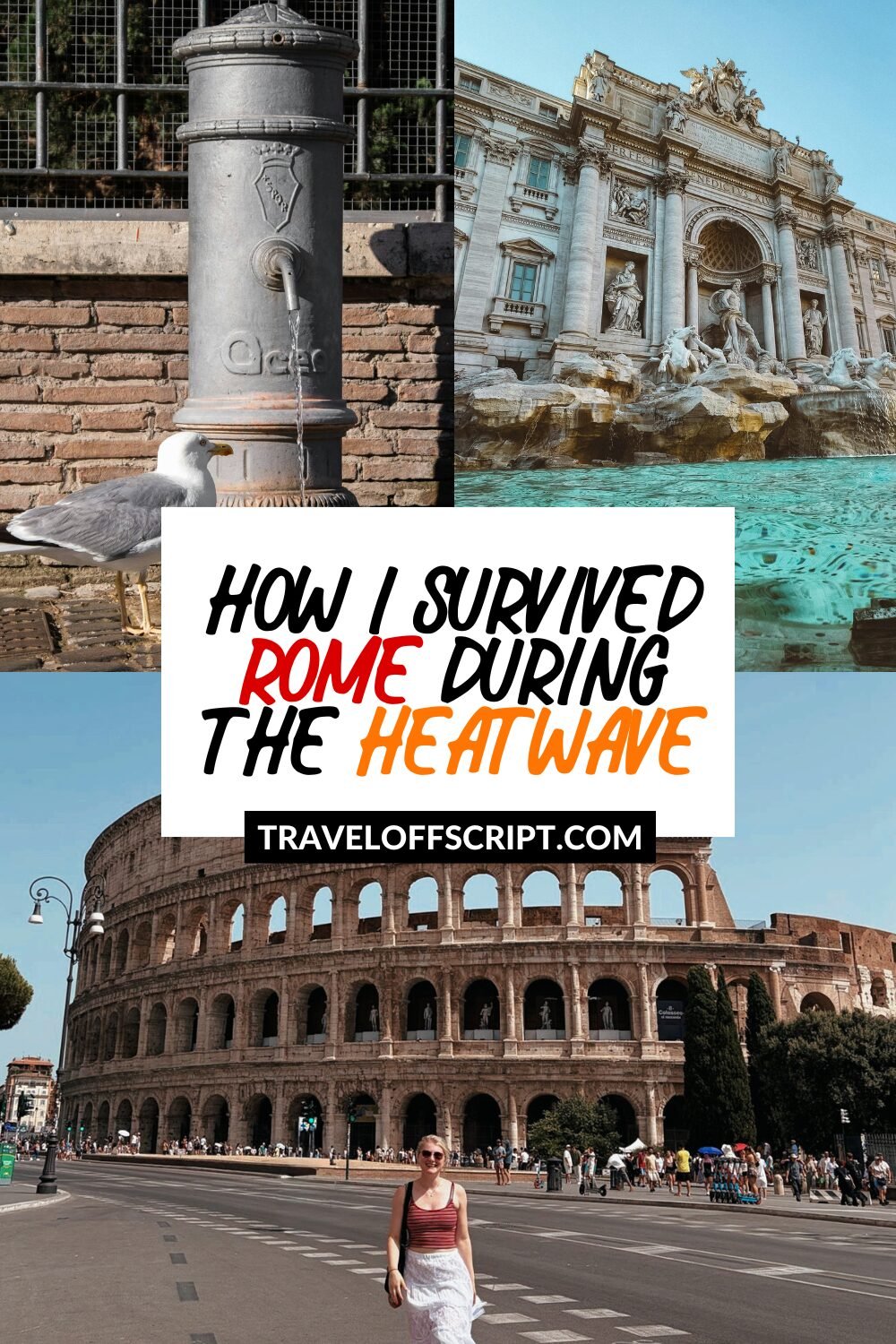
I recently visited Rome as a tour guide with one of my groups and the heat wave was in full effect, meaning 38°C/100F every single day. Our time there included a 3-hour walking tour and more, so here is exactly how you can also still make the most of your time in Rome during the heatwave.
This blog may contain affiliate links to support the running of the blog. If you make a purchase through these links, I will earn a commission at no extra cost to you. Thank you.
We arrived in Rome around 12pm in the middle of July, to a temperature of 38°C and a 3-hour walking tour ahead of us. When I tell you morale of my tour group was low, it was pretty much non-existent. Nevertheless, with the promise of ice cream, AC store breaks and Rome’s higlights, we successfully completed our sightseeing tour.
While a heatwave in Rome can feel unbearable at times, there are certainly things you can do to make it a little more bearable and still make the most of this stunning city. After all, you don’t want to come to Rome and not see the Colosseum, Trevi Fountain, Vatican and more!
Here are the things that will become your best friend in Rome during the heatwave and how we survived the worst of it:
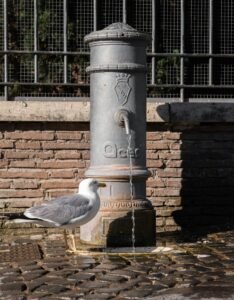
Nasoni – the free cast-iron water fountains that are everywhere. They often havve cold water which you can use to fill up your water bottle but also cool down your hottest points (back of neck, wrists – carefully).
Early morning and after 7pm – these are the only times that the heat is manageable and the perfect time to do a lot of exploring and walking.
A Mini-Fan – these are life savers, though be warned that when it becomes too hot, they do just blow hot air back at you. I found it helpful up to like 36 degrees. Here is the one I have.
Stores/restaurants with AC – honestly most big stores have ACs and restaurants and cafes will advertise by saying they have AC. These are the only thing that will give you some relief during the hottest points of the day.
A lightweight scarf – you will want to wear as little and as breathable clothing as possible, so bringing a lightweight scarf is ideal for still being able to visit religious sites
Sunscreen!!! – do not skimp on sunscreen, my group had some pretty horrible burns. I find a spray one really helpful when it’s super hot and sweaty and I don’t feel like re-applying.
Siesta – Siesta is a short nap in the afternoon, typical in Southern countries to avoid the heat. But honestly, your best defence is going back to your AC hotel during the hottest hours, for me that was from around 2pm to 6/7pm. Get up early instead and have a nap in this time.
This is somehow still a very common question, even though Rome has drinking water fountains as shown above on every corner and tap water is drinkable too.
However, ordering tap water in restaurants is not a thing and you will be charged for bottled water. This is a local custom and not a scam.
Check out my full guide on the water situation in Rome here.
Do any of the main sights have AC?
Honestly, most of Rome’s sights do not have AC, including the Colosseum, Roman Forum, most of the Vatican and the Pantheon (thought that one feels cooler due to the thick walls). I would highly recommend scheduling them in as early as possible, as they become very overwhelming very quickly in the heat.
Especially the Colosseum and Vatican, book them as soon as they open! for the Colosseum that’s 8.30am, the Vatican Museum and Sistine Chapel at 8am and the St. Peter’s Basilica from 7am. If you have enough days in Rome, try scheduling one thing each morning. The Roman Forum is part of the Colosseum ticket but can usually be visited within 24 hours of your ticketed time, so you could go the next morning too.
What can I do during the middle of the day if I don’t want to sit in my hotel room?
You could plan around the few attractions that do have AC, such as Galleria Borghese with the beautiful Borghese gardens, National Roman Museum, Palazzo Barberini and Galleria Spada.
Alternatively, Rome is actually sometimes referred to as a “Lasagna” because over history the street level was continually raised and new building just built on top of old ones. That means Rome has quite a few underground attractions now.
You could visit the Catacombs, Museo e Cripta dei Cappuccini, Vicus Caprarius – The Water City, the Vatican Necropolis and Case Romane del Celio. All of these are below ground and will hence be significantly cooler than the rest of Rome.
Is public transit in Rome air-conditioned?
Yes, technically a lot of Rome’s public transit has AC, but I have found it very hit and miss. Newer buses and metro lines are usually nice and cool, however you will often get an older bus or tram that is sweltering hot.
Can I cool off in historical fountains?
Absolutely not, no matter how many tourists you may spot doing it. If an officer spots you, the fines are huge! And I’ve seen many a tourist fined. Plus it’s considered very disrespectful, as these monuments are thousands of years old most of the time.
You can use the small Nasoni drinking fountains to cool off your neck or even pop your head under, but never put your feet or really any part of your body in the bigger, historical fountains!
Where to stay in Rome?
Rome has many amazing hostels and hotels. Check out my full accommodation guide, from budget-friendly to fancy hotels, out here.
From my personal experience and leading backpacker groups through Rome, you can expect to spend around 100€ per day. That would mean budget-friendly hotels/hostels and Italian street food for lunch instead of two big meals.
Accommodation is minimum 40€ per person per night, activities around 20-30€ per day, food from 30€ per day (local restaurants and street food) and transport 3-8€ per day.
Do you need cash in Rome, or are credit cards accepted?
I’d say 95% of the time you do not need cash and credit cards are fine. I have seen a few stores who don’t accept American Express, but other cards are fine, but usually most stores in tourist areas accept any cards.
For smaller shops and markets, you can sometimes get a discount when paying cash as vendors have to pay high fees on card.
I’ve very rarely come across any place that does not take card, it’s usually street stalls or local shops.
Do you have to book Colosseum tickets in advance?
Yes, ideally buy your Colosseum at least 1-2 weeks in advance as times sell out quickly in peak season. Make sure to buy through the official site, I have had a few guests book through fake sites that looked almost identical but charged triple.
The Colosseum & Roman Forum ticket without a guide should be € 18.00!
My blog is here to show you that there isn’t one correct way to travel the world. Together, we can figure out what that means for you. Learn more about me here!
Travel Off Script contains affiliate links to support the running of the blog. If you make a purchase through these links, I will earn a commission at no extra cost to you.